Pages

Showing posts with label Trinity College Dublin. Show all posts

Thursday, March 18, 2021

ORSON WELLES | He Was in My Dad's Dublin Crowd

Young Orson Welles
April 5, 2021—Orson Welles was the topic of the next event at 192 Books and the Paula Cooper Gallery, at 22nd Street and Tenth Avenue in Manhattan, on March 25. The location (a block away from where Alice and I live in New York City) is at 192 Tenth Avenue

David Thomson authored of more than twenty-five books, including The Biographical Dictionary of Film, biographies of Orson Welles and David O. Selznick. Thomson has used his biography of Welles as a base for a more comprehensive review of the history of movie directors, The Light in the Dark.


Michael Barker interviews. He is co-president and co-founder, with Tom Bernard, of Sony Pictures Classics, which celebrates its 30th anniversary this year. Previously he was an executive at United Artists (1980–1983) and co-founder of Orion Classics (1983–1991). This talk is recorded— https://mailchi.mp/192books/david-thomson-in-conversation-with-michael-barker-1243200.


A Family Connection


Orson Welles has a connection to my parents, Spike Marlin (1909-1994) and his then-fiancée Hilda van Stockum (1908-2006). My father was a student at Trinity College, Dublin and my mother was a student at the Dublin School of Art in 1931, when Welles, 16 years old, got a part at Dublin's Gate Theate playing the Duke in a new play, Jew Suss. Stories of Welles's early days in Ireland are brilliantly told here: https://www.independent.ie/entertainment/movies/genius-in-the-making-orson-welles-in-ireland-34237664.html.


One evening Welles came to dinner— a week early. Probably it was a confusion over the word “next” as in “next Thursday” (...but not this Thursday). Even then, Welles had made himself famous (his theater career began at 16 in 1931), and my mother was in conniptions. She pulled a dinner together... 


The life of Orson Welles has been the subject of three recent documentaries. https://scriptmag.com/features/it-depends-is-your-story-idea-safe-one-shared-idea-three-unique-films. My sister Lis tells the story that our Dad Spike (and maybe Hilda, says my sister Brigid) were having breakfast in New York City when Welles suddenly said, “Must go, I am getting married this morning!" His first marriage was in 1934, so it must have been to Virginia Nicolson, to whom he stayed married until 1940. He married Rita Hayworth in 1943 and stayed with her until 1947. He married Paola Mori in 1955 and stayed with her until 1985. His biography lists two "partners": Dolores del Río (1940–43) and Oja Kodar (1966–85). He seems to have been serially monogamous until 1966. All that must be in Thomson's biography.


Six of the Trinity Crowd in Dublin, 1930-32


These are his contemporaries that Orson Welles glommed onto in Dublin:

  • John Cyril Donnelly. Born in Dublin, Ireland on 2 Apr 1912 to John Herbert Donnelly (1876-1956) and Gertrude Mabel Robinson (1885-1982). He passed away on 29 Jun 1948 on Pershing Av, Lima, Peru. 
  • Christopher ("Christo") Gore-Grimes.
  • David Grene, who went to the University of Chicago. One of his sons is at Trinity College, Dublin and the other has a band focusing on Irish music. Alice and I have met the latter. David was deeply distressed, says his son, about Willem’s love affair with the Provost’s daughter Pic Gwynn.
  • Ervin Ross ("Spike") Marlin, who married Hilda van Stockum. They had six children, one of whom is your blogger (#5, second youngest). 
  • Owen Sheehy ("Skeff") Skeffington. He wrote a book. When Spike was in Dublin during the war, working for the OSS, he looked up Skeffington. Lis says that when she started at Trinity, Skeffington “gave us an introductory lecture. He said everyone loves Ireland because Ireland has never done anything for another country so nobody owes it anything.”
  • Willem van Stockum, brother of Hilda van Stockum (my mother), who married Spike Marlin. He had a love affair with Pic Gwynn, who wanted to marry him but was overruled by her father, Trinity College Provost Edward John Gwynn. https://www.tcd.ie/provost/addresses/2018%20-%202019/2019-02-07-Launch-Gwynn-Family-Papers-%27A-Splendid-Tradition.php. (A father could do that kind of thing then.) Gwynn was doubtless concerned about someone taking his daughter away to Holland or the United States. That was the objection of Marconi's Irish mother to the marriage of Guglielmo Marconi to Inez Milholland (they were engaged for months). In a twist of fate, Willem's uncle Eugen married Inez instead of Marconi (she proposed to Eugen on a boat in 1916; Marconi said that Eugen was better suited to her). Inez said later, "The radio is wonderful but on reflection I wouldn't want to be married to one." Willem never married. He volunteered for air force service when his country was invaded and he trained in Canada. He piloted a bomber during the week of D-Day. A monument has been erected in France, near Laval, to him and his crew.  The story of Pic and Willem is well told in Time Bomber by Robert Wack (2014), for example on pages 27, 84-85. https://www.amazon.com/Time-Bomber-Robert-P-Wack/dp/0984523286

Monday, June 22, 2015

HvS LETTERS | Spike Marlin to HvS, Nov. 2 and 24, 1932

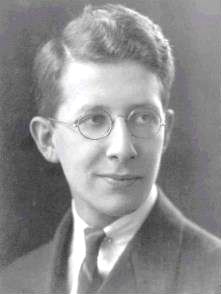
Ervin Ross (Spike) Marlin, c. 1932
These are the first two letters from Spike Marlin in New York City to his wife Hilda van Stockum in Dublin, Ireland. They had been married June 25. Spike had to take his exams in the summer of 1932, and then he left for New York City to find a job. The first letter (November 2) is a very personal letter - a love letter about his job search, which is illuminating because of the time and place. Spike was looking for an entry-level job in New York City in November 1932, in the depth of the Great Depression, and it was as difficult as could be. However, these two letters span the election on November 8 of Franklin Delano Roosevelt (FDR) as President of the United States. 

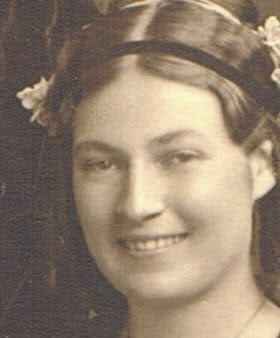
Hilda van Stockum, 1932.
2121 Belmont Avenue
Bronx, New York

November 2 [Wednesday], 1932
Hilda, dear girl,
Your first letter finally arrived today. It came like a gift from Heaven. I hadn't seen you for such an age, my frenzied activity about New York had set up a formidable barrier of impressions in my mind between our last days together and my present frantic existence. Here was my Hilletje of reality. It was good to read your letter, good to sit with you and listen to your delightful stories on the train, etc. 
You forgot to mention that sad scene at the Greenstown [?] railway station. Didn't our separation affect you the way it did me? How romantic it was! Slowly at first, faster, and faster the train moved away with its precious burden until your dear waving arm was enveloped by the clouds of smoke and steam from the locomotive. Then the curve and your disappeared from my view. Ah! It was thrilling: so moving, so satisfyingly emotional. No motion picture director ever planned it so well.
Now, about myself. Last night I had dinner with the two old Trinity men, Coulter and Dowling at the latter's home! He and his wife occupy a sumptuous flat in a fashionable part of the city but their dinner lacked style. Dowling and his wife brought the meal in themselves, à la camp manner. Maids in New York are great rarities. 
In the course of the evening's conversation we got down to business. Coulter brought back the story of Hackberry jam [something HvS must have written and illustrated]. He said it wouldn't do because it was negative, amateurish, and unsuitable. But he was encouraging; said it was good for a first attempt, that it was original, and that you could draw. That was that. 
As for a job he recommended I should concentrate on my Foreign Service exam. Things here are desperately tight although, as I previously noted, they don't look so different on the surface. He and Dowling invited me to lunch next week to meet a man who was in the Foreign Service and who would give me some inside dope and a recommendation. Very decent of them, wasn't it?
I had come to this conclusion myself. Everything possible for getting a job has been done. Agencies, friends, and influence; I shall see what fruit they bear. But instead of sitting back passively I am going to compensate work for my exams. Today I posted several letters to Washington according to Belovsky's instructions. Perhaps there is another opening in Washington. Tonight I shall write to Hamilton. Your cable came this morning, many thanks. Naturally I felt a wee bit disappointed because I knew you wanted me to get a first-class mod T. I did want one myself but.... As everyone says, in a year nobody will know what I got. Over here they don't know the difference at any time. Could you send me a complete list of the different grades I got in each exam? Don't forget my red book, darling.
Your second letter came tonight, little sweetheart. A lovely letter! Your drawing is wonderful! I'm sure Punch will make the mistake of its history if it turns you down. Excellent! It is very sensible of you not to worry about us, dearest child. I shall move heaven and earth and my lazy carcass to build our house. In about a week I shall have some definite word concerning my future, and then you will be able to mark off the days until your departure. 
Meanwhile you must know how encouraging your sweet letters are to me. They give me new life and strength and a determination to fight any of those dragons you fear. My sole complaint is that I never get an opportunity to meet the dragon face-to-face in single combat. My dragons are more subtle enemies and their chief weapons are discouragement and disappointment. But I swear to you they will never conquer me so long as I can draw strength from our love. 
You are right, sweetheart. I do love you. Every woman I meet confirms my love by comparison, not that I spend my time comparing you with them! No! A supreme contentment, a blissful satisfaction has made me completely indifferent to all women but you. I never want it to be otherwise either. It is as though a powerful desire had been fulfilled to leave my energies unhampered for the fight for existence. 
If the State Department has an exam soon I shall forget all else and work, work, work for it. A few swift months, a series of your incomparable letters and then my little Hilletje waving from the boat, running down the gangway into my outstretched arms. Angelkind, herlije swesje, darling, darling.
Your dogged, determined husband.
Spike

One week later, the newspapers were full of the election of FDR. It was a sweep of 42 out of the 48 states.
This was the news, one week after Spike Marlin's first letter.
There were great expectations that things would get better. This is reflected, surely, in the optimistic tone of the letter, and the sense of the need for the country to move in direction that FDR was taking it. My brother Randal Marlin is impressed with the extent to which our Dad was invested in social reform. Not until March, when FDR was inaugurated, would the bank panic end and the economy start to return to normality. Not until after FDR's election would Spike get a job based on a competitive exam - working for FDR. (Not until World War II would the economic boom of the 1920s return.)


2121 Belmont Avenue
Bronx, New York

November 14, 1932
Dearest little treasure,
Three letters of yours arrived this morning together with one from your mother! It was a Gala day for me. I also received a letter from George Prince, an old school boy friend who is recovering from a slight attack of tuberculosis and pneumonia at Saranac Lake, New York. I thought for a brief moment you meant for me to give your regards to George Prince instead of Prince George! He is also married and welcomes us to the inner circle of blessed matrimonial friendship. 
I was very pleased to learn that Jan's disease has been discovered and that he too is gaining back his health. Ireland is not a suitable place climatically for him or you, for that matter. Speaking of climates I must say you will get more zest from life when you experience the dry, sunny, and cold atmosphere here. In the city it makes little difference whether it rains or shines but the country is beautiful, beautiful. Give Jan my best wishes please. I am so glad you joined the gym; I felt somehow that you would like it, and it really is good for you.
Now, about myself. Yesterday I went to the Loesser's house for tea. They are the friends of Jack and myself. Mrs. Loesser, who has had considerable experience with children's books examined "The Day on Skates" which I brought along. The whole family went in genuine raptures about it and if you have heard their put-on raptures you know that these are simply super-, super-loud, long, and luscious. They were crazy about the coloured pictures and they immediately ordered copies of the book for themselves and little cousins as soon as it is published. 
Mrs. Loesser read the story and approved of it heartily. She suggested a few minor changes such as omitting such abstract words as totally and some others, also changing Dientje to a simpler name or else explaining its pronounciation in an explanatory parenthesis. Enthusiastic is not the word to describe their approval my dear! She says we should have no difficulty getting it published. Tomorrow the Literary Guild, through my uncle's influence, will examine it. 
A cousin of mine who is married and going to set up house was so delighted with them that he wants you to do four pictures of the same size, on that hard paper, in water-colours like the book. Each picture will represent a season on the year, i.e. Spring, Summer, Autumn and Winter. All in Holland with your children in costumes and lots of colour. I didn't like to soak him and I didn't want you to be underpaid so I suggested five dollars each for them. At the present rate of exchange that would be about thirty-two shillings each. The important thing is that he will act as a good publicity man and you will probably get heaps more to do as a result. Mrs. Loesser loved Moedertje and the Indian as much as the others. She says we could do very well with all the pictures by exhibiting them in an art gallery. I feel sure, darling, you will be a great success here!
Today I finished my article on Ireland and I handed it in to the New York Times. Tomorrow I will know whether they are going to accept it. Tomorrow too I am going to Fordham University to persuade the Holy Fathers of the Roman Catholic institution that they should offer a course in Irish History and that I should teach it. Then off to another Irish Roman Catholic institution, Manhattan College, and another, St. John's on a similar mission. Did I tell you that I hoped to persuade all of them and then I would have three jobs! If I am successful you shall come over after Christmas.
Darling, I do miss you. Thousands of ideas are buzzing in my head waiting for their turn to be recorded on paper for an article with your help. I expanded a bit about impressions of America when I wrote to George Prince who is an old newspaper man and he advised me to exploit my ideas, thought them acceptable for our publications. Wouldn't it be great if we were together and could discuss our ideas, collaborate, - I write and you illustrate or, more likely, you write and you illustrate. Perhaps it's the climate or the great movement and life that goes on here. Anyway it's terribly invigorating, stimulating, both for mind and body. 
Maybe I was supposed to be a journalist. I want to write about why revolution would be impossible in this country, the lack of class solidarity here, the tradition of selfish individualism, the absence of idealism. That is another promising theme, of course - the spiritual vacuity of American life. Will this Depression have any effect upon this state of mind and soul? Will the careless, boundless prosperity return? Is the spritual life compatible with a high and general standard of comfort? I think we lose spiritually when we remove ourselves from nature and reality by the mechanical "comforts" of our life in America, and the mechanical music, the mechanical amusements, etc. 
This aspect may be exaggerated; it may be possible to reconcile mental and spiritual development with our civilization. I may be committing the logical error of post hoc ergo propter hoc. Tomorrow I shall give it my full attention. I find that in writing an article the important thing is to decide definitely on the subject, a subject of limited scope, and then to work from that viewpoint. Otherwise one adduces everything or all related to the subject and attempts to incorporate these points in the article. This was the mistake I made in my Irish article and for that reason I don't expect it to be accepted unless they take it for the cartoons which is most likely. They are excellent. Especially the Poe parody. 
You might send me some newspaper clippings of the latest developments in Ireland. I am going to deliver some public lectures here in the city, in order to get the reputation of an authority on the subject. Send me your invaluable opinions and the no less invaluable comments of your Mother and Willem. She will be disgusted with me when she reads what I wrote, if it is permitted. In an earnest attempt to be unbiased I rather erred on the wrong side from her point of view by sympathizing with de Valera.
If you get the opportunity to meet Francis Hachett, who is in Dublin now, do. I know his brother Dominick here, a delightful gentleman, and just as Irish in his ways as when he left the old country years and years ago. A real scholar too although he is a Civil Servant. He would like to meet you when you come.
I've just listened to a talk over the wireless by Cosmo Hamilton, the English novelist whom I once had the pleasure of meeting and hearing personally. He spoke of Arnold Bennett. One thing he said about Bennett reminded me of my own habit. He says that wherever he went, whatever he did, Bennett was always a man with a net that gathered ideas, plots, incidents, reflections. [Arnold Bennett is the person, says Olga Marlin, whose book led Hilda van Stockum to joining the Roman Catholic Church.] In the past week I have been like that; jotting down thought that have risen to the surface of my subconscious, before going to bed, on the subway train, walking in the street - almost everywhere except at home when I sit down resolutely to think consistently. 
O that I had my mind under control! My facility for expression too is limited. I find my feelings are too complicated for words, that is the words at my command. The trouble may be that I read appallingly little of what may be described as "pure" literature.My reading has been serious for the most part. This, I think, is not a bad thing. Better to have ideas with a limited vocabulary than vice versa, especially if you are a reformer, an idealist like myself. Yes, I would prefer to do something for the good of mankind - ridiculous notion - than to earn money by diverting people - not that that isn't a good thing in itself. Not good enough, perhaps. 
I need you sweetheart, and at night I pray that God may give me the opportunity to send for you forthwith. But, we must realize that conditions here are bad, very bad, and that change in our competitive system, the necessary antecedent of a return to prosperity, will long be prevented by the selfishness of the real owners of the country.
My love and my family's to you and your family. Eleven billion kisses.
Ervin

Comments by Their Children

The letter was typed up by my son Jay as a Father's Day present, June 21, 2015. He has been typing out family letters when he can. None of us remembers seeing these letters before. Comments from emails follow: 

Olga
: I was very happy to read Dad´s letter, and get an insight into his interior world. At the time we were growing up he was unable to talk about it (at least to us). We did understand each other, in an unspoken way. Interesting that he writes about Arnold Bennett. Later on it was Bennett´s book, "Now I See" that brought Mom into the Catholic Church.

Brigid: Oh, that letter is so sweet; it made me cry! 

Randal: The first letter was lovely but personal and private. The second letter was very perceptive about society. I thought his views about U.S. culture and the unlikelihood of revolution based on lack of idealism and the over-riding ethos of the self-oriented individual applicable today still. The stinginess of the rich also seems true of today. I would be happy to see this published, especially as the theme of technology and the need for contact with with nature is very much in line with Jacques Ellul's thinking.

Lis: Lovely and a real insight into life in the 1930s as well as their relationship.


Sunday, October 19, 2014

HvS | In Dublin, 1929-32

Hilda van Stockum as Art Student, 1929-32
The National Gallery of Art in Dublin has been including Hilda van Stockum's two portraits of Evie Hone in their calendars and catalogs. Since they are sticklers for obtaining permissions for every reproduction–doubtless because they expect the same in return–they are in touch with the family regularly.

Their latest question (from Marie) is about HvS's time studying art in Ireland. What information do we have on this period? Are there any relevant letters?

My search is not ended, but HvS's art studies in Amsterdam are much better documented for a simple reason. When Hilda was at the Rijksakademie van Beeldende Kunst (Royal or State Academy for Fine Arts), she lived with her Aunt Hilda de Booy and she sent long letters to her mother in Dublin.

My mother wrote out these letters in a copy book. I transcribed them into electronic form and posted them on the boissevain.us site. These letters, in a family collaboration, were turned by Brigid Marlin over several years into chapters for her Society for the Art of Imagination magazine into a book, the first 12 chapters of which are posted. I will post a corrected version and then the entire book shortly (one of the chapters I posted is out of order). We intend to add art from the period and publish the edited letters as a book through Boissevain Books.

The Irish periods occur before and after her time at art school in Amsterdam. She was at art school in Dublin before, and was a mature artist afterwards. Her second period in Dublin should be especially interesting, because she was mixing in the Trinity College crowd with her brothers, who were both students there. Through her brother Willem she met her husband.

In Holland she was just one of many good art students. In Dublin in the second period she had much more self-confidence and stood out because she had experience from two different centers of art. A book of Irish Artists of the 20th Century is limited to a small number of artists and HvS is one of them - her claim to Irishness being her Irish grandmother (Emily Heloise MacDonnell) and her two periods of residence in Dublin as a young woman and then another three years in Dublin in 1951-54.

Some of the drama of those years was focused on HvS's brother Willem. He was a prize-winning student of Mathematics at Trinity. He won a gold medal that is not awarded in many years. (He sold it in the Depression, to his great distress, to help out his sister. It would be good to know where it is and whether it could be repurchased.) His life has been written about in Time Bomber by Robert Wack, and it goes into considerable factual detail about Willem's love for Pic Gwynn and vice versa.

While they were in Dublin, the van Stockums - Olga, Hilda, Willem and Jan - shared the gardener's cottage at the home of Billy Kirkwood and Harrie Jameson Kirkwood on the Howth peninsula. Brigid reports that the cottage was divided in half and the gardener had one half and the three van Stockums had the other.

Willem, of course, moved out to be in Trinity College Dublin lodgings, where he roomed with Ervin R. (Spike) Marlin. Jan later also went to Trinity. Hilda and Spike got married in 1932 and rented a home somewhere. That is where Orson Welles, who I think was then also a student at Trinity Dublin, arrived for dinner a week before scheduled.

Spike then went ahead to New York City, to look for a job - no easy assignment in the Depression. He did some work on overdue premium collection for Prudential Insurance, I believe, before he took a competitive exam to join FDR's administration. He was one of 300 people selected out of thousands of applicants. He also found a publisher (Harper  Brothers) for HvS's first book, A Day on Skates, which was published with an introduction by her Aunt Edna St. Vincent Millay in 1934, also the year Olga E. Marlin was born.

Thursday, July 19, 2012

V for Victory Anniversary July 25

Hilda van Stockum, The Mitchells, Cover
The Mitchells, 1945 [Click here for link]

On July 25, 1941, the New York Times reported, British Prime Minister Winston Churchill announced a plan to take back Europe from Hitler, called "V for Victory".

This was also the subtitle of Hilda van Stockum's book The Mitchells, which is about the World War II effort as seen through the eyes of her five children growing up in Washington, DC.

We were in Washington because my father E.R. "Spike" Marlin, HvS's husband, was an early recruit to the management ranks of FDR's New Deal, via a competitive Civil Service exam he took in 1933 after FDR's administration had taken over. He worked for the Farm Credit Administration, the Civil Service Commission, and the Budget Bureau before the war broke out. After the war he want back to the Budget Bureau.

How did the war affect the Mitchell and Marlin families? The reality was quite close to the fictionalized story, with some important differences. Here are ten of the ways the war affected the family as described in the first 26 pages of the book, with some comments on the reality of the story:

1. On page 1, Joan is teary-eyed because Daddy is leaving to be drafted. The five children and Grannie are at Union Station to see them off. Uncle Jim has already been drafted. Fact: Daddy was exempted from the draft because he was working for the Federal Government already. But he was  taken away from Washington work for the OSS in Dublin and then London, after a period of training with firearms and OSS protocols.

2. Daddy is described as an electrical engineer. Fact: He actually concentrated in history and political science at Trinity College, Dublin. He was recruited by the OSS because he had many Irish friends and his first post was in Ireland where he worked with the Irish and British intelligence services on the activities of the German and Japanese representatives in Ireland.

3. Uncle Jim had already enlisted. Fact: Dr. Willem Jacob van Stockum, HvS's brother, who was teaching at the University of Maryland, was subject to the draft although a Dutch citizen. WvS got a deferral to complete his academic year at Maryland. The American military apparently wanted him to work on the bomb and he wanted to see action, so WvS volunteered for the Royal Canadian Air Force, where he became a bomber flying instructor and then a pilot of a Halifax bomber.

4. To skip to the end of the book - both Daddy and Uncle Jim return. Fact:  HvS's husband returned from the war, but her brother Willem perished after a series of successful bombing runs on German-occupied France during the week of the Normandy landing, June 1944. He flew with the Royal Air Force in 1943 and 1944, and was shot down over Laval, France on June 10, 1944. He is buried with the other six members of his crew and with the seven members of another Halifax bomber on the same mission.

5. On page 10, Peter makes the point that in a war people have to leave home, even if it isn't safe.

6. On page 11, the taxi driver explains that he is too old to be drafted, but has two sons in Italy.

7. On page 20, Uncle Jim is described by the children as braver than Daddy because Uncle Jim enlisted. Mother explains: "Uncle Jim had no one else to worry about while Daddy has all of you as well as Grannie and me."

The NYTimes Story
on V for Victory
8. On pages 21-22 the three eldest children discuss the fact that Mother is not looking so well and wonder what they can do to help her and help win the war. Prices have risen and military pay is not as good as private-company pay. The "V for Victory" (Five for Victory) idea is something they come up with as the name of a club to make a contribution to the war effort. Their first ideas were to earn war stamps and save scrap. Fact:  The V for Victory slogan was picked up in the United States - Victory Gardens were one manifestation. Prices did rise a lot during World War II, but were kept down by (1) sale of Victory Bonds via stamps sold in denominations as small at ten cents, which took purchasing power out of the economy, and (2) price controls.

9. On page 25, the two club songs of the V for Victory club are "Anchors Aweigh" for Daddy and "Into the Wild Blue Yonder" for Uncle Jim. Fact:
Daddy was in the OSS (the World War II-era U.S. intelligence service, succeeded by the CIA), but two of his brothers were in the Navy; both returned. Uncle Willem was in the air force, but not the U.S. Air Force.

10. The Five for Victory Club on page 26 shows how the club got money for turning in (recycling, we would say today) bottles. Peter took the money and bought stamps toward a V for Victory bond. Fact: The Savings Bonds were a brilliant idea for financing the war effort.

Hilda van Stockum wrote three books about World War II. The Mitchells is about an American family in the United States. The Winged Watchman is about a Dutch family in German-occupied rural Holland. The Borrowed House is about a German couple that goes to a Dutch city, Amsterdam, to entertain the troops (the SS and the Wehrmacht), and their daughter Janna, who is shocked to find that the Dutch do not welcome their German invaders.

The Mitchells is usually grouped with two later stories about the family in Canada. But the three books about World War II make their own trilogy. As a group, for me they are the centerpiece of Hilda van Stockum's work. It is remarkable to have these family-oriented perspectives on that terrible war. Someone once asked: "Who is the protagonist in The Mitchells?"  If you had to pick a single person, it would have to be Mother. But my mother's answer to the question was: "The Family is the protagonist. It is the Family that must cope with all the disruptions and threats."

The two books about the Dutch occupation are among the top dozen books about World War II for children (out of 125 listed). The Mitchells is among the top 40 on the same list.

Sunday, October 30, 2011

QUERY | John Cyril Donnelly

I have received an email from Tim Smyth, who is I researching the life of John Cyril Donnelly (1912-1948). Donnelly was attached to a smart Trinity College, Dublin crowd in the early 1930s.  
This group included
- E. R. ("Spike") Marlin
- Willem van Stockum, brother of Hilda van Stockum who married Spike Marlin
- Owen Sheehy ("Skeff") Skeffington
- Christopher ("Christo") Gore-Grimes
- David Grene, who went to the University of Chicago
- Orson Welles (when he was in Dublin for his play)

All I have been able to find is a link on Ancestry.com with the following information:


John Cyril Donnelly Found 10 Records, 5 Photos and 267,629 Family Trees

Born in Dublin, Ireland on 2 Apr 1912 to John Herbert Donnelly (1876-1956) and Gertrude Mabel Robinson (1885-1982). He passed away on 29 Jun 1948 on Pershing Av, Lima, Peru. 
If you have any information about Mr. Donnelly, please send me an email and I will forward it to Mr. Smyth).
John
John Tepper Marlin